
Why Private M&A Transaction Use the Cash-Free, Debt-Free Convention
Private M&A deals are conventionally priced on a Cash-Free, Debt-Free (“CF, DF”) basis. But why is that the norm, and what does it actually mean?
The short answer: cash and debt reflect capital structure, not operations. Capital structure varies by owner preference. Operational performance does not. Buyers value the business based on its ability to generate future cash flows—the operations—not based on how the current owner chooses to finance those operations. They are acquiring the operations, not the capital structure (mix of debt and equity).
What CF, DF Means (and Why It Matters): While closing a modest $8 million add-on acquisition, a PE friend of ours encountered a revealing exchange:
Broker: “This deal will be Cash-Free, Debt-Free, right?”
PE Firm: “Yes.”
Broker: “So, Debt-Free means my client pays off all the debt, right?”
PE Firm: “Correct.”
Broker: “And Cash-Free means the cash stays in the business for you—the buyer—to keep, right?”
Stunned, the PE firm managed to calmly (and disingenuously) reply, “Yes, of course,” knowing the broker had just misinterpreted a foundational concept.
But that is not what Cash-Free means.
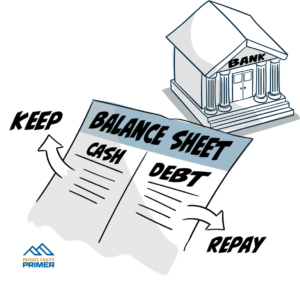
- Cash-Free → Seller keeps the cash on the balance sheet at closing.
- Debt-Free → Seller must pay off all debt at closing.
The broker’s misunderstanding cost the seller real money. The business had over $800k of cash, meaning the seller unknowingly left more than 10% of deal value on the table.
As Warren Buffett famously quipped: