Putting Extreme Ownership to Work

Deal work is chaotic, time-compressed, and deeply interdependent. Small misunderstandings can cascade quickly, and ambiguity compounds under deadline pressure. Extreme ownership thrives in exactly these conditions—where clarity, accountability, and disciplined execution determine whether teams move fast and move in the right direction. To be valuable on a deal team, you must own your individual sphere of influence and execute. That is why we have new hires read Extreme Ownership.

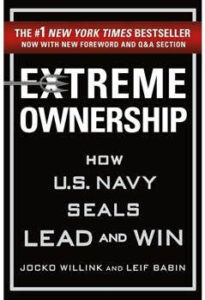
Written by retired Navy SEALs Jocko Willink and Leif Babin, the book distills the leadership principles they refined under life-and-death pressure in Iraq. The core idea is simple but demanding: leaders own everything in their world, including results, failures, communication, clarity, alignment, and execution. The authors suggest that these same principles map cleanly to high-stakes business environments, where ambiguity, time pressure, and interdependence can often mirror battlefield complexity.


Key Takeaways

  • Extreme Ownership is the foundation of effective leadership. Strong leaders do not blame fog, friction, or other departments. They assume responsibility for outcomes, communicate clearly, set priorities, and ensure the team understands the mission. Ownership is not about authority—it is about accountability and clarity of action. This helps set and raise standards.
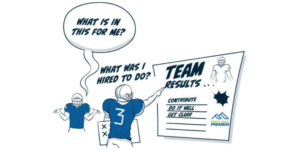
  • Teams win when goals are understood, shared, and reinforced. No amount of individual talent overcomes unclear objectives. Two-way communication builds trust, improves buy-in, and enables each person to “own their piece” in context—not in isolation. Clear priorities enable effective execution.
  • High-performing teams rely on distributed leadership. Leaders cannot act alone. Teams succeed when multiple individuals step up. This means anticipating needs, solving problems before they escalate, and supporting the broader mission. Extreme ownership scales past the leader when teammates internalize it by owning their sphere of influence and put team objectives above individual or siloed goals.
  • Debate early; align once the decision is made. Healthy teams challenge assumptions before decisions are locked. Once direction is set, subordinates shift from critique to execution. The mindset is: What does the leader see that I don’t? How do I best advance the objective now? This is what great operators across domains do—focus on what is next, not what they wish was true.

Considerations for M&A Professionals

  1. Own your workflow—end to end. In deals, small misses compound quickly. Owning your workflow means understanding dependencies, anticipating downstream effects, and communicating risks early and often. Ownership is not “I did my part;” ownership is “I ensured this part works for the team.”

  2. Expect and enable distributed leadership. Hierarchies exist, but leadership is not limited to titles. Analysts lead when they structure a model others rely on, associates lead when they frame issues with clarity, and VPs lead when they set priorities. Extreme Ownership means stepping up when the moment requires it, not just when your job description says so.

  3. Communicate up, down, and across the deal team. Speed and ambiguity make communication a weapon system by sharing clear objectives, constraints, and timelines. Bring uncertainties to the surface before they become rework. Tight communication allows small teams to absorb large amounts of new information without breaking.